Operating Conditions and Tanker Specifications
Operating requirements vary by cryogenic gas, tanker model and delivery application. Keep cargo temperature, tank working pressure and discharge pressure distinct: each is a separate specification, and none should be assumed to apply universally. For example, the case study describes liquid nitrogen transported at -196°C; this is not a standard temperature for every cryogenic tanker or gas. Confirm the applicable temperature limits, tank working pressure and discharge requirements with the tanker and system manufacturers before selecting or operating equipment.
Gardner Denver control systems are configured around the requirements of the tanker, cargo and delivery conditions. Specific operating limits should always be confirmed for the tanker and hydraulic system being used.
Thermal Insulation and Cryogenic Liquid Transport
Maintaining cryogenic conditions during transportation is primarily the role of the tanker and its thermal insulation.
Cryogenic tanks and transport containers are designed to limit heat transfer from the surrounding environment. The insulation system and tank construction depend on the tanker model and the cryogenic product being carried.
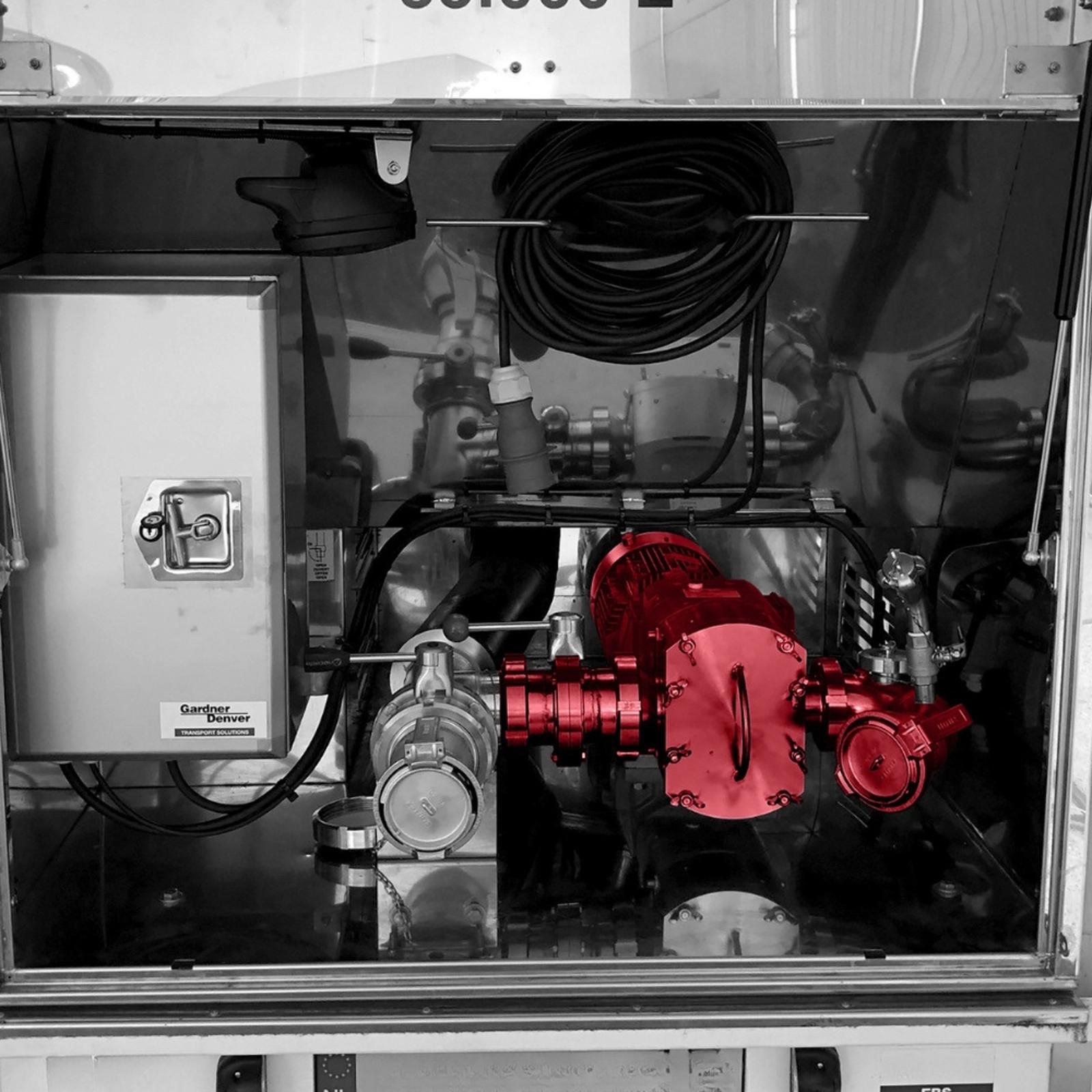
Gardner Denver's electronic and hydraulic systems perform a different role: they support controlled product discharge from the tanker at the delivery site.
Controlled Cryogenic Liquid Discharge
Different delivery sites can require different flow rates and discharge pressures.
Gardner Denver electronic control systems are configured to deliver the appropriate flow rate according to the required discharge pressure and site conditions. The systems support products including liquid oxygen, liquid nitrogen and liquid argon.
By adapting system performance to each delivery, operators can achieve controlled and efficient product discharge across different cryogenic applications.
Ease of Operation & Energy Efficiency
Our electronically controlled hydraulic systems work alongside the vehicle operator throughout the discharge process.
The controls can integrate with the vehicle's engine control system and are configured to deliver the appropriate flow rate according to the required discharge pressure. This supports efficient operation during cryogenic distribution and discharge.
Operating pressure, temperature limits and other system requirements depend on the tanker, cargo and configuration and should be confirmed for each application.
Enhanced Safety Systems
Cryogenic tanker operations require appropriate safety procedures and equipment.
Working with cryogenic tanker customers, Gardner Denver has developed over-pressurisation prevention systems for demanding cryogenic applications. Our hydraulic oil coolers can also incorporate sensors designed specifically for cryogenic tank applications, helping reduce the risk of operational issues.